Why sales teams resist digital tools (it’s rarely about the tools)
4 min read
Key takeaways
- Sales resistance to a new digital tool is usually a symptom of a brief written without sales input, not a reaction to the tool itself.
- A brief that lists features without addressing real day-to-day problems leaves people to assume the worst about how the change affects them.
- Sign-off on a written brief, with no prototype or mockup, is sign-off on a guess.
- Bringing sales in during discovery, before requirements are locked, costs nothing extra. It just moves the same work earlier.
The point where digital rollouts go wrong
When a digital rollout stalls, the blame often lands on the sales team for resisting change. In practice, the real reason lies earlier in the project: a meeting the sales team was never invited to, a brief they never saw until the decisions in it had already been made.
A task lands from IT, from marketing, or from the leadership team, and it gets written up as a brief before sales has any input. Requirements get locked, and a system starts to take shape around assumptions that no one in sales has had a chance to challenge.
Slow adoption after launch is usually less about the tool and more about how much of the build happened without sales in the room.
This is the gap that a structured discovery process exists to close: pulling people in early enough to surface needs that would otherwise remain hidden until the system is already live.
Features get specified. Needs get missed.
A well-written brief and a well-informed one aren’t the same thing.
Plenty of specs are detailed and articulate on function, screen by screen, button by button, without ever addressing the situation people are in: the problems they’re solving day to day, and what happens if those problems go unaddressed.
That’s the gap between a feature list and a set of needs. It’s the same gap Rixxo’s SPIN APE® framework exists to close in platform selection decisions, working through situation, problem, implication, and need before anyone starts specifying a solution.
Sales teams who spend their days taking orders and building relationships can see a new digital tool as a threat to their role, and that reaction is reasonable. If a brief never explains how someone’s measured, valued, or paid changes, people are left to assume the worst on their own.
Sign-off without a prototype is sign-off on a guess
A brief is just words and a list of features. Without diagrams, mockups, or something to click through, there’s nothing to look at before it’s built. So when someone signs off, they’re agreeing to their own idea of what those words mean, not to something they’ve seen. That gap stays hidden until launch.
The person approving the brief assumed things that seemed too obvious to write down. The person building it worked from what was written, under genuine time and budget pressure.
Neither side did anything wrong, but what’s delivered often differs from what was pictured, and by the time anyone notices, it’s an expensive fix.
The point where a project is easiest to correct, before a line of code is written, is usually the point where the least checking happens.
What good discovery looks like in practice
Good discovery puts people in the room early, forces the brief to address needs rather than just chase features, and gets something visual in front of the sales team before sign-off, not after.
It’s how our strategic consultants, Karen Renshaw and Jessica Redman, run discovery, shaped by their years in distribution and manufacturing businesses before they joined Rixxo.
None of that takes more time than the alternative: it takes the same time, spent earlier, while changing your mind still costs nothing.
Proof
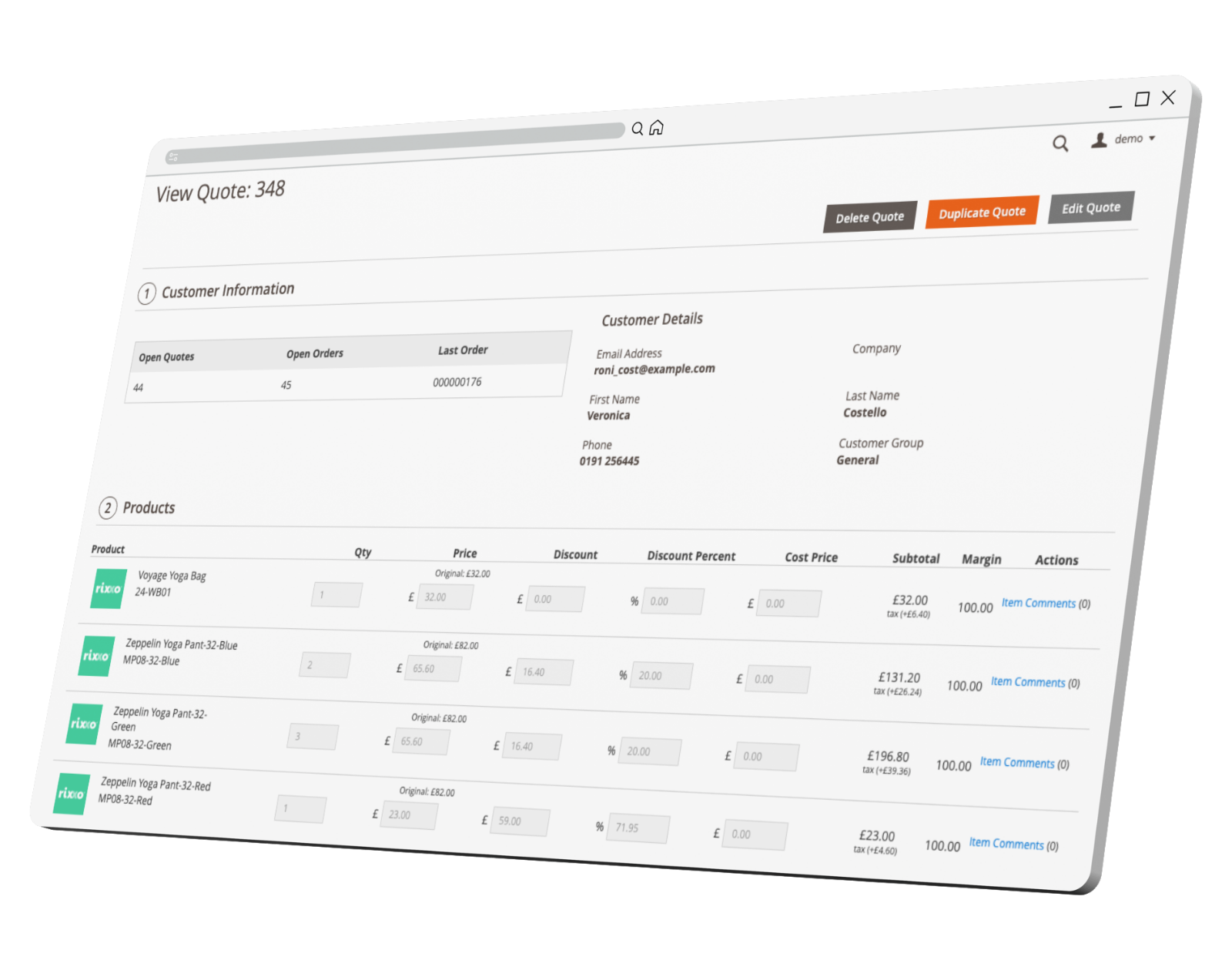
The pattern shows up in a platform rebuild we completed for a building materials distributor, alongside a rollout of ODB™, Rixxo’s Magento order dashboard, to dozens of their salespeople.
Before the rebuild, salespeople taking orders over the phone couldn’t see what a customer browsing could see: personalised product recommendations and the customer’s own agreed trade pricing. Which means a salesperson picking up the phone to help someone place an order had less information about that order than the customer already had in front of them.
That’s backwards for a team whose job is to sell, and it’s what happens when a system gets built without sales having a say in how it should work.
This time, the sales manager helped shape the new system from the start of the project, rather than being brought in only after it was built. Before launch, the team also tested the new system against more than 100 real reorders from existing clients rather than relying on dummy data.
Processing genuine orders surfaced the exact pricing quirks, delivery patterns, and account-specific rules that had been invisible before, the same kind of gap that had left salespeople working with less information than their own customers, and fixed it before the site went live.
If you’re already three months in
Forcing a stalled rollout to completion and marking it as done doesn’t make for a successful project. While it may look “finished” on paper, the issue of platform adoption remains unresolved, leaving the team less engaged.
The better move is to pause and assess properly, bringing in people who’ve lived this from inside a similar business before and letting them look honestly at where things stand. Rewinding part of a project, rather than pushing through it, is often the right call, even three months in.
Running the SPIN APE® process at this stage gives a structured way to document the situation, problems, implications, and needs that got missed the first time round, and that documentation becomes the basis for realigning the project rather than guessing at what went wrong.
If there’s one thing to take from this before your next project starts, it’s this: get someone from sales in the room before the brief is finalised, not once it’s already approved. Ask them what happens when a customer wants payment terms the system doesn’t support yet, or a delivery pattern nobody’s specified. Their answer is the brief you’re missing.
Where Rixxo comes in
Getting everyone into the room early is how discovery gets run as standard at Rixxo. Our strategic consultants bring their own time inside distribution and manufacturing businesses into every project, so the questions come from lived experience rather than a template.
If you’ve got a platform change coming and want sales bought in from day one, that’s worth a conversation now.

daniel landless
Business Development Manager
Daniel comes to Rixxo with a background spanning sales, account management, and multi-site operations. He knows how to build relationships that last and lead teams that deliver.
In practice, that means you get someone who listens properly, understands the operational side of a B2B business, and gives it to you straight.
Outside work, you’ll find him lifting heavy things at CrossFit, hiking somewhere scenic, or hunting down a great coffee and somewhere new to eat.
He takes his BBQ low and slow, and his wine seriously.
Related blog posts
Blue Badger is up for Best B2B Website of the Year. Here’s how we built it.
Blue Badger has been shortlisted for Best B2B Website of the Year (up to 50…

B2B eCommerce World UK & Europe 2026: The verdict
Last week the Rixxo team travelled to London for the inaugural B2B Ecommerce World UK…
Automating B2B eCommerce credit safely
Key takeaways Why B2B businesses delay credit automation For many B2B businesses, credit is one…
Why data integrity is a business risk in B2B eCommerce
Key takeaways If data breaks, revenue falls You’ve watched an inventory mismatch cost you sales,…
Don’t underestimate integration. Everyone does.
Integration is where good projects go wrong Digital transformation projects often fail because integration gets…

Eggs Before Chickens: Aligning B2B Teams Before Features
I’ve sat through enough B2B strategy sessions to know exactly when the wheels start to...