
Composable commerce is swinging back: Why bundled solutions are returning
B2B commerce is swinging back from fully composable to bundled platforms
The B2B commerce market is currently undergoing a significant architectural correction. After a decade of chasing the “best-of-breed” dream, the pendulum is swinging back from fully composable stacks toward a more pragmatic, bundled approach.
I recently sat down with Bryan House, Chief Product Officer at Elastic Path, to discuss this shift. Bryan has seen this cycle from multiple angles, having worked in venture capital and at companies like Acquia during the rise of headless architecture.
His observation is clear: the market went from monolithic suites to fully composable architectures, and is now landing on “bundled composable”. This isn’t a retreat to the rigid systems of the past, but a response to the “supermarket problem” that has plagued B2B implementations for years.
The three phases of the pendulum
The evolution of commerce technology follows a familiar pattern of expansion and consolidation.
Phase 1: the monolith
Historically, commerce platforms were all-in-one suites. You bought a single application that handled the catalogue, the cart, the checkout, and the CMS. These systems were stable but rigid. Customisation meant fighting the platform’s core assumptions, leading to expensive upgrades and version lock.
Phase 2: fully composable
As APIs became the standard, the religious fervour for composable commerce took over. The promise was simple: buy the best search, the best CMS, and the best commerce engine, then wire them together. This offered broad flexibility but introduced a massive start-up tax in the form of integration complexity and vendor management.
Phase 3: bundled composable
We are now entering the correction phase. Vendors like Elastic Path are building core services such as CMS, search, and visual page builders back into the platform. You get the speed of a bundle with the escape hatch of composable architecture.
What is composable?
For those not living in the architectural weeds every day, composable commerce is an approach where a business selects and assembles best-of-breed commerce components and combines them into a custom application.
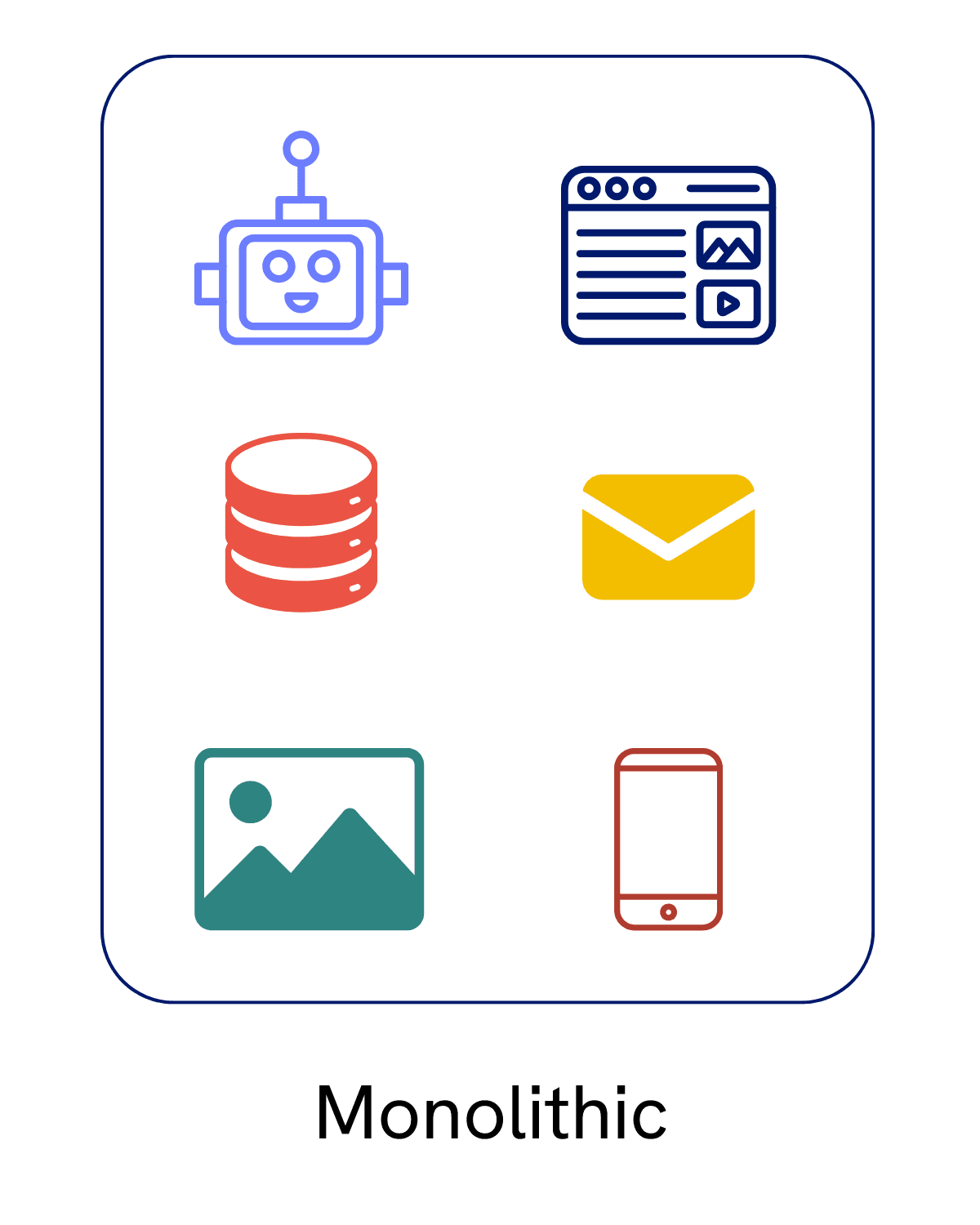
Instead of one giant block of code, you have a collection of independent services (microservices) that communicate via APIs. It is cloud-native and headless, meaning the front-end user experience is entirely decoupled from the back-end logic.
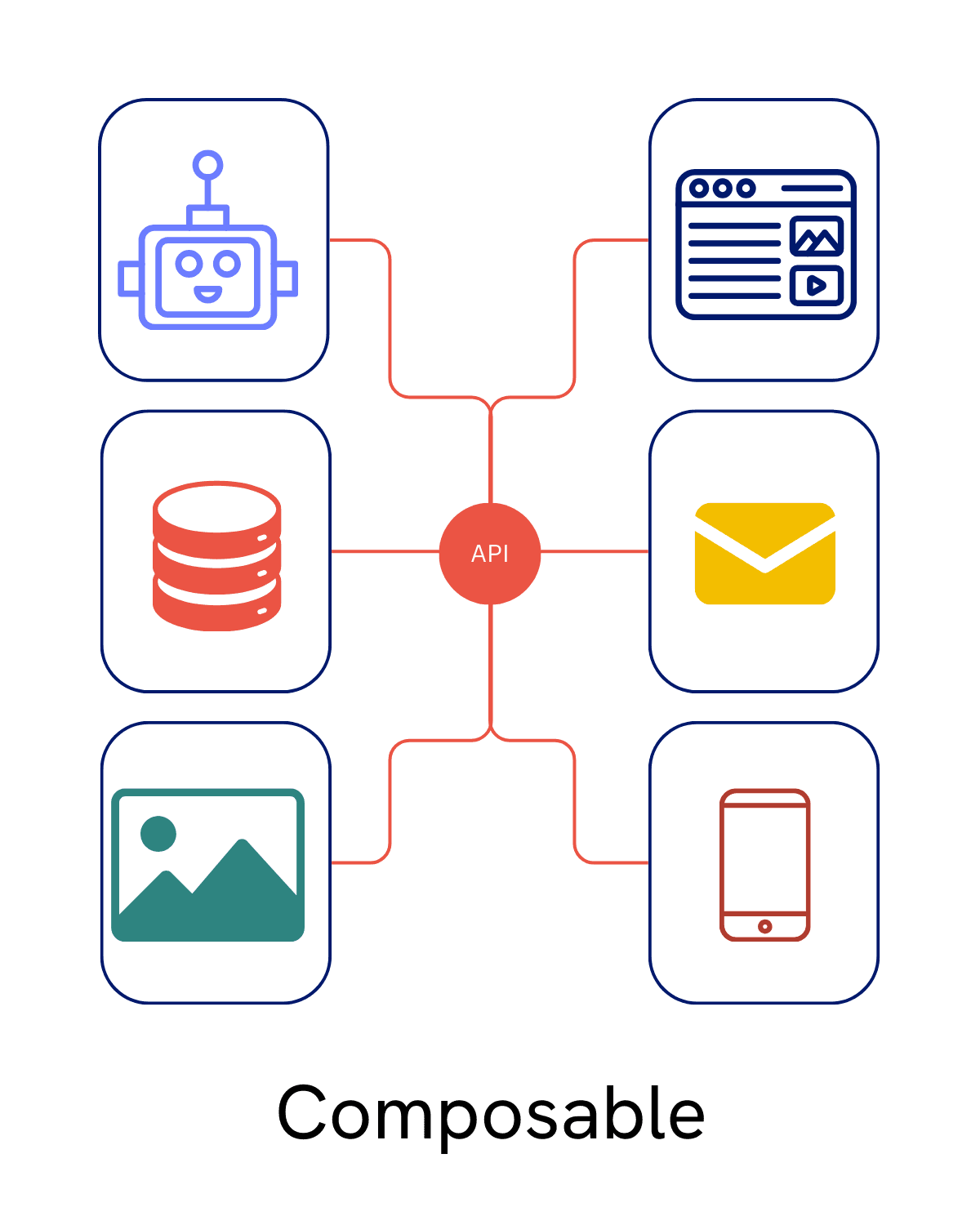
The goal of composable is agility. If your search provider falls behind the market, you should be able to swap it out for a better one without rebuilding your entire website.
The “supermarket problem” in B2B
The primary driver for the return of bundling is the sheer exhaustion of the best-of-breed model.
I often compare buying technology to doing the weekly shop. We spend our lives going to one supermarket because it is efficient. Composable architecture is like visiting a different specialist shop for every single ingredient. The quality might be slightly higher, but the logistics of visiting ten shops just to make a sandwich becomes unsustainable.
For a mid-market manufacturer or wholesaler, managing five different vendor contracts, five different support channels, and five different integration points is a full-time job that has nothing to do with selling products.
Why military-grade stability still matters
In the rush to be agile, many businesses forgot that the primary job of a commerce platform is to stay upright under pressure.
Bryan shared some ride-along details that illustrate the scale of modern B2B and high-performance commerce. Pokémon, for example, handles drops where they sell 60,000 units in ten minutes. Motability, the UK car scheme, sells 1,000 cars in five minutes, twice a day. T-Mobile runs on these architectures because they cannot afford to fail during an iPhone launch.
When you are operating at that level of intensity, military-grade stability is the value proposition. A fully composable stack where you are responsible for the performance of every integration point can become a liability during high-traffic events. Bundled solutions offer a single point of accountability for that performance.
Who are Elastic Path?
Elastic Path is a software company that provides a composable commerce platform specifically designed for complex B2B and B2C environments.
Founded in Vancouver, they were one of the first companies to champion the headless approach. They gained significant momentum in the mid-market after acquiring Molten, a UK-based multi-tenant SaaS platform. Today, they are known for their Product Experience Management (PXM) capabilities, which allow B2B businesses to manage complex catalogues, negotiated pricing, and custom product configurations without heavy custom coding.
Their move to bundle CMS and search back into their core offering is a direct response to the market’s demand for faster time-to-value.
AI as a “system of work”
The most interesting part of the shift back to bundling is how it prepares businesses for AI.
In the previous decade, we talked about SaaS as a UI on a database. You logged in, you looked at data, and you changed it. Bryan argues that AI is shifting the focus toward a system of work. It isn’t just about showing a product on a screen; it is about automating the multi-step workflows and approval processes that make B2B commerce notoriously frictional.
He told a story about a dealer who walked into a room and found 30 people manually re-typing car data from one system into another just to make it available on their own web products. This is where AI earns its keep. By using AI as a system of work, you can take a 14-minute manual process and reduce it to 21 seconds. This isn’t just theory; it is about handling the ride-along data that humans usually have to verify manually.
For AI to perform, it needs structured context. A bundled platform that handles the catalogue, the content, and the search in a unified way provides a much cleaner data set for AI to act upon. If your data is fragmented across five different best-of-breed providers, the context window for your AI becomes fragmented too.
Product data as your API to the world
Bryan’s unique differentiator is the focus on Product Experience Management (PXM). He views product data not just as information for a website, but as your API to the world.
In a B2C context, this means being discoverable on earned properties and social channels. In B2B, it means making your complex product configurations and negotiated price books structured and available for AI-led discovery.
Buyers are getting more comfortable asking LLMs hard questions like, “I have a 40-year-old HVAC unit, what part do I need to fix the main valve?” If your product data is buried in an unstructured PDF or a legacy database, you are invisible to that buyer. Bundled composable platforms are focusing on structuring this data so it can be served to these new discovery engines effectively.
The return of the technical leader
For a while, the industry chased the myth of the citizen builder—the idea that business users would assemble commerce apps using low-code tools. Bryan’s experience suggests this hasn’t happened. Commerce is too complex, and integrations are too critical.
As a result, the buying power has pivoted back to the CTO, the Chief Digital Officer, and the technical architect. These leaders are often the ones living with the consequences of home-grown systems. In the B2B space, home-grown solutions are common because traditional platforms were historically too rigid.
Technical leaders are now choosing bundled composable because it allows them to eliminate the sufficient but not differentiated work. They do not need to build a custom search engine or a custom CMS. They need to build the unique business logic that handles their specific contract negotiations or complex part architectures.
By using a bundled platform for the foundation, they can focus their engineering talent on the 10% of the stack that actually creates a competitive advantage.
The “swap later” promise
The strategic logic of the bundled composable approach is the positioning: you do not lose the flexibility of composability, but you do not have to start there.
You can launch with the bundled search and CMS to get to market in months rather than years. Once the business is generating revenue and you have identified a specific need for a specialist tool, you can swap that component out.
This addresses the primary fear of the monolithic era: being stuck with a good-enough tool that eventually becomes a bottleneck. The escape hatch is always there, but you are not forced to use it on day one.
Strategic recommendations for B2B leaders
If you are currently evaluating your platform selection roadmap, consider these three principles:
- Prioritise time-to-value over architectural purity
Do not spend six months picking a search vendor if a bundled option meets 90% of your requirements. Launching is more important than being perfectly composable. - Treat AI as a workflow tool, not a chatbot
Look for where your teams are re-typing data or manually approving orders. That is where AI and bundled data models will provide the most ROI. - Build for the ride-along reality
If your business has peak periods or complex drop-style requirements, ensure your platform offers military-grade stability as a core feature, not an afterthought.
Observation: the next decade of B2B commerce
We are moving away from the era of buying a box toward one of designing a language.
Technology is a language we use to tell our business story. If you let the technology tell the story for you, it will not be a very good one. The return of bundled solutions gives B2B businesses the vocabulary they need to start selling quickly, without losing the ability to write their own unique chapters later.
Execution determines whether you scale revenue or scale chaos. Bundled composable is the industry’s way of choosing revenue.
